How to Style Fresh Flowers in Your Home
There’s a reason a single vase of fresh flowers can make an entire room feel finished. They add color, softness, and a sense that someone lives there and cares about it — something no throw pillow or piece of art quite replicates. But there’s a real difference between flowers that look like they belong in a space and flowers that look like they were just set down wherever there was room. With a few simple principles, you can style fresh flowers the way a designer would: intentionally, and in a way that actually complements your home.


Let your existing palette choose the flowers, not the other way around
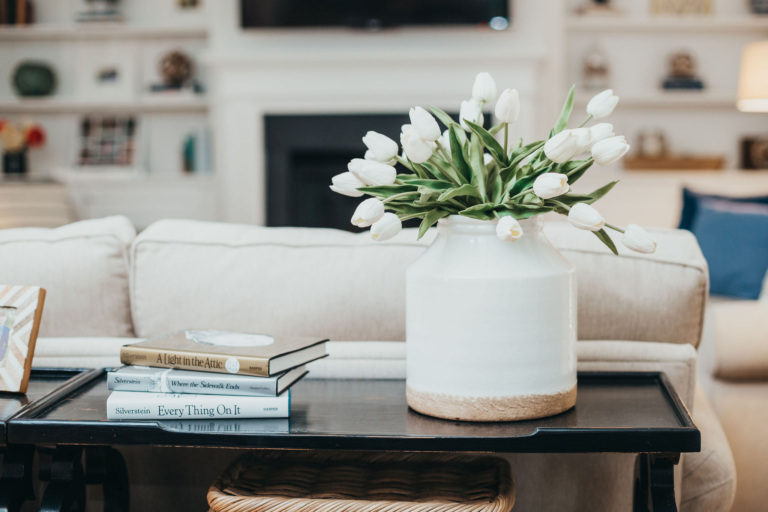
Before you buy a single stem, look at the room you’re styling. Fresh flowers should feel like an extension of your color palette, not a competing one. If your space leans neutral and warm, soft whites, blush, and muted greens will feel right at home, while a single saturated pop — a deep burgundy dahlia or a bright citrus ranunculus — can work beautifully as an accent against that calm backdrop. The mistake we see most often is flowers chosen purely because they were pretty at the store, with no thought to whether their color has anything to do with the room they’re headed into.
Vessel matters as much as the flowers themselves
The vase is doing more design work than most people give it credit for. A tall, narrow vase reads modern and architectural; a low, wide bowl feels relaxed and organic; a simple ceramic pitcher brings warmth and a collected, unfussy feel. Match the vessel to the style of the room, not just to the flowers — a sleek glass cylinder in a farmhouse kitchen can feel oddly out of place, even if the flowers inside are perfect. When in doubt, simple and substantial almost always outperforms ornate.
Skip the perfectly symmetrical bouquet
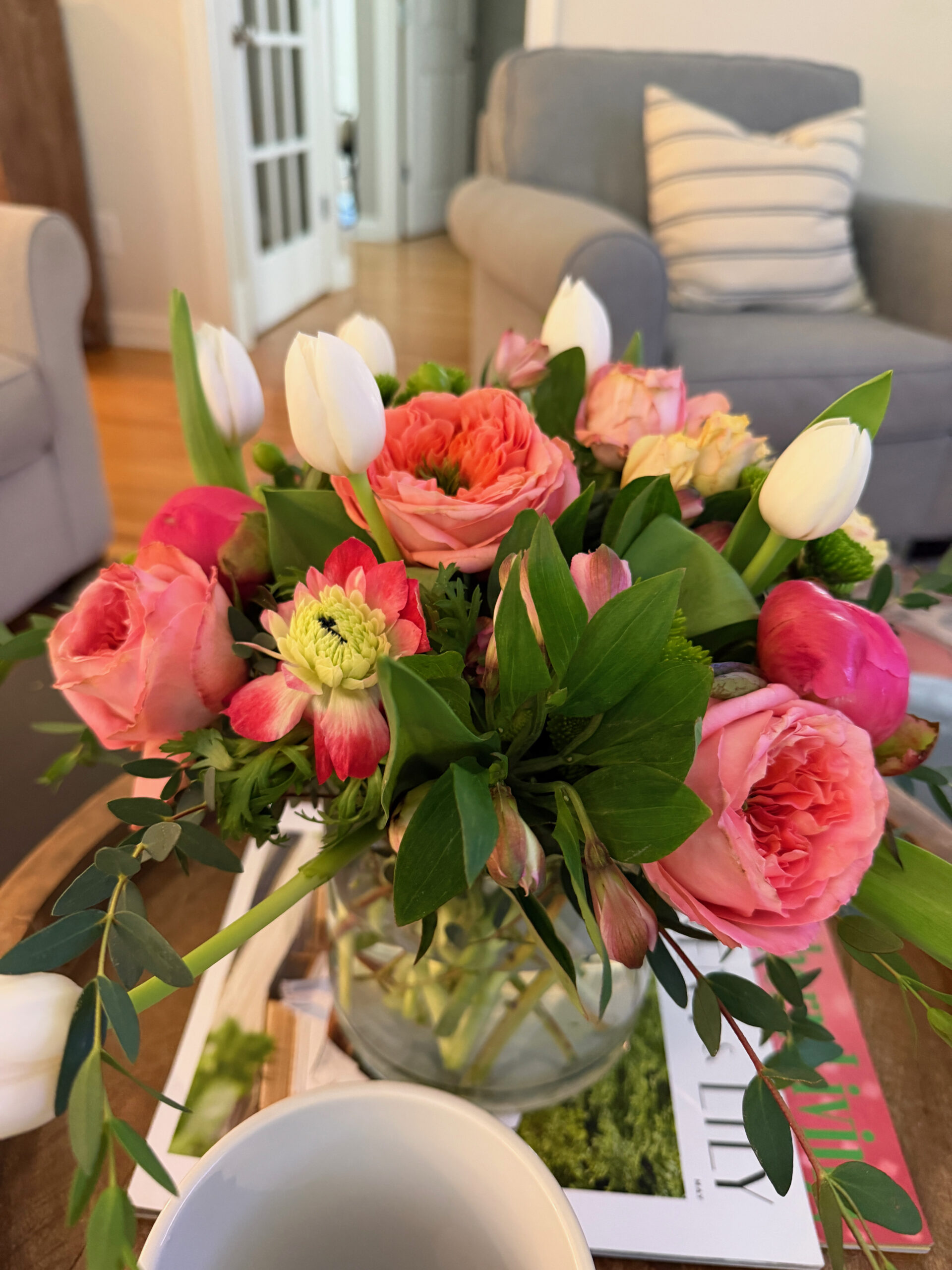
One of the easiest ways to make an arrangement look more natural and more expensive is to avoid the tight, uniform, dome-shaped bouquet. Instead, let stems fall at varying heights and angles, and mix textures rather than sticking to a single flower type — pair a few larger blooms with something wispy or trailing, like greenery or a delicate filler stem. Odd numbers of stems tend to read more naturally than even ones, and a little asymmetry is what makes an arrangement look gathered from a garden rather than assembled from a formula.
Place them where they’ll actually be seen and enjoyed
Flowers deserve better placement than “wherever there was counter space.” Think about the moments in your day when you’ll actually notice them: a small arrangement on a nightstand or bathroom vanity, a low centerpiece on the dining table that doesn’t block sightlines across it, or a single stem in a bud vase on a desk. In larger rooms, a slightly oversized arrangement on a console table or mantel can act almost like a piece of art, anchoring the space the way a lamp or a sculpture would.
A little goes a long way
You don’t need an elaborate, expensive arrangement to get the effect. Three stems in a good vase, styled thoughtfully, will almost always look more intentional than a large, mismatched bunch styled carelessly. If you’re working with a tighter budget, focus your best flowers in the one or two spaces you’ll see most — an entry table or a kitchen island — rather than spreading a little bit of color thinly across the whole house.
Fresh flowers are one of the simplest, lowest-commitment ways to bring a space to life, and like most good design choices, it really comes down to intention: the right color for the room, a vessel that fits the style, and a little imperfection in how it all comes together.